
It is not a matter of which one is “better”, as both information technology (IT) and data science are important fields that have different areas of focus. Both are in demand, but the specific roles and career paths will depend on you as an individual.
IT focuses on the use of technology to manage and protect information and computer systems, while data science involves the use of data to gain insights and make informed business decisions.
Rapid growth vs the ‘sexiest job’
On the one hand, data science has been called the “sexiest job of the 21st century” (Harvard Business Review, 2012), and on the other, employment in computer and information technology is projected to grow 21% by 2029 in the US alone (Bureau of Labour Statistics, 2023) due to the fast-paced growth of technology, which has resulted in great demand for skilled IT professionals across various industries around the globe.
Both are seemingly attractive options, but one should consider each option objectively. Let’s unpack what both fields are, as well employer demand.
What is IT?
IT encompasses a broad array of techniques, equipment, and services that involve software, hardware, communication tools, and more, used for generating, manipulating, archiving, preserving, and transmitting information electronically.
Growing demand for IT skills can be attributed to increased reliance on technology – IT now forms the backbone of almost all business, financial, medical, engineering, educational, sales, marketing, and sporting operations, and is essential for the smooth functioning of many more, from agriculture and manufacturing to logistics and utilities.
The value of the global information technology security market alone, at $248.26-billion in 2019, is expected to reach $371.51-billion this year, with compound annual growth at 9.3%.
What is data science?
Using data to guide decision-making, freeing it of personal bias, is crucial for making informed, objective choices.
Data science involves the collection, processing and examination of data to identify patterns and relationships that help evaluate the effectiveness of business strategies and inform future plans. Mathematical, statistical, AI, and computer engineering techniques are combined to analyse massive amounts of data.
This analysis enables data scientists to investigate what has prompted changes, to predict what might occur in future, and what action should be taken – and what action to avoid – given the analysis and projections alongside environmental analysis.
There’s also room in industries such as retail, finance, hospitality, health, and education (to name a handful) to use data science to personalise services and experiences for customers, as well as to improve operational efficiency, and to support scientific and research efforts.
So which is better? Data science vs IT
Data science involves analysing and interpreting data to uncover insights and trends, while IT focuses on maintaining and managing technology and information systems.
The question of which one is better from the perspective of making a career choice depends on your goals and interests. Both fields are valuable, and both involve unique skillsets and responsibilities. Choosing between the two ultimately depends on your strengths, aptitude, and what you want to achieve career-wise.
Reasons to work in data science and IT
Still torn between the two? While demand for both types of professional is expected to remain high across sectors and around the world, here’s a checklist to help you decide between fields.
| Information Technology | Data Science | |
| Focuses on managing and maintaining information systems and interfaces | Focuses on the management, mining, and interpretation of data | |
| Plays a critical role in keeping the organisation connected and running smoothly | Solves real-world problems Plays a critical role in business decision-making | |
| Requires: Logical mindsetUnderstanding of business needsTechnical skillsAbility to:Troubleshoot and solve technical problemsSimplify technical issues for nontechnical colleaguesManage changeManage projectsStaying updatedInterpersonal skills | Requires: Analytical and creative mindsetUnderstanding of business needs and broader operating environmentSkills in:Statistical analysisCodingData wrangling Visualisation Problem-solving Project managementExcellent communicationInterpersonal skills | |
| Offers wide range of tech-related roles in sectors such as retail, finance, manufacturing, health, logistics and education | May work on a stimulating range of projects, some on the cutting edge of the discipline |
Data science courses
Even if you make a choice and decide after a while that it wasn’t what you really wanted, you can always upgrade your skills to move over to the other field. Your experience will give added depth to how you exercise your skills in your new field.
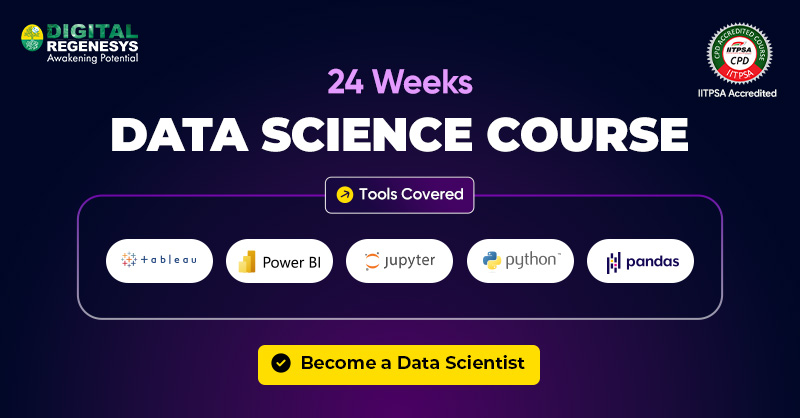
If you are considering a switch to data science – or even just getting started as a data scientist, have a look at the data science courses offered online by Digital Regenesys. There are courses at different levels – basic, advanced, and applied – to suit the stage of your personal learning journey.
References
Bureau of Labor Statistics (2023). Occupational Outlook Handbook, Computer and Information Research Scientists.Davenport, T.H., and Patil, D.J. (2012). Data scientist: the sexiest job of the 21st century.
Leave a Reply