Artificial intelligence, or AI, is becoming a part of everyone’s daily life. It is changing the way we carry out tasks and live overall. Beginners must not find it overwhelming to use AI.
Individuals can get started with this technology and use it to their advantage by following a few simple steps. A strong foundation in AI will also help individuals to level up their careers in the technical field.
This article will guide you through the basics of AI, its uses and applications. It will also provide a step-by-step guide on how to use AI.
About the Basics of AI
AI is a field of computer science that focuses on developing smart machines. These machines can perform tasks requiring human intelligence, like reasoning, problem-solving and learning.
AI systems identify patterns, learn from experience, and make decisions based on large amounts of data. This data acts as the training material for AI. The quantity and quality of the data are essential for the performance of AI.
Some key areas that AI includes are:
- Deep Learning (DL)
- Machine Learning (ML)
- Computer Vision
- Natural Language Processing (NLP)
Know more about the benefits of machine learning.
Uses of AI
Understanding the benefits of AI will help you gain an idea of how AI can simplify tasks and make life easier. Here are the various answers to the “what can AI be used for” query:
- Minimise human error: AI can reduce manual errors in tasks that humans usually make.
- Eliminate recurring tasks: AI can perform recurring tasks. This can free up individuals to work on more complex tasks.
- More accurate and faster processing: AI can process more information quickly than a human being. This can include discovering relationships and identifying patterns in data that humans might miss.
- Improved research and development: AI can analyse large amounts of data quickly. This can result in improved research and development.
- Infinite availability: AI can stay on continuously and work on the assigned tasks.
Learn more about how AI is shaping the future of work.
Applications of AI
AI applications are becoming common, given their range of benefits. This section will let you know what artificial intelligence is used for across different aspects of our lives. Listed below are the applications of AI in industries and our everyday lives:
- Healthcare
Medical professionals provide better care to patients by using software backed by AI. AI has the following uses in the healthcare sector:
- Drug discovery
- Early diagnosis
- Disease tracking
Gain more insights into the role of AI in healthcare.
- Online shopping
Many shopping websites use AI in a variety of ways. Listed below are some of the ways in which customers and business owners experience AI in online shopping:
As a customer
- Customised product recommendations based on past shopping activity.
- Delay and shipping estimates.
As a business owner
- Demand and sales forecasts
- Creating customer profiles.
- Transportation
The application of AI in transportation has made it more efficient and safe. The following are the various applications of AI in transportation:
- Navigation apps make use of users’ location data to determine ETAs and traffic.
- Ridesharing apps use AI to set fare rates and predict road conditions.
- Fraud prevention
Major banks use AI for fraud detection and prevention. The systems analyse transactions and recognise patterns to flag suspicious activity.
- Social media
Social media platforms are another common way people experience AI. Major platforms run on algorithms powered by AI. These algorithms determine what users like and show more of such content. This helps keep users engaged.
How to Use Artificial Intelligence?
Beginners searching for “how to use AI” on the internet can follow a simple step-by-step approach to get started. Given below is such an approach:
Step 1: Develop a learning plan
The first step is to create a learning plan. This plan must include the goals, timeline and resources you will refer to.
To develop this plan, you should be aware of the following:
- Your current level of knowledge on how to use AI
- Your main purpose for learning
- The time that you can spend in the learning process
- Your preferred mode of learning
Step 2: Gain the prerequisite skills
You should be curious about how to use AIduring the learning process. It is also beneficial to have a strong foundation in basic mathematics and statistics. Individuals with a strong grasp of mathematical concepts, interpreting data, and statistics will find it easier to understand AI.
It would also be ideal if you are adaptable in nature. This is because AI is rapidly evolving, so you need to keep up with the latest developments.
The level at which you need to gain the prerequisite skills depends on your ultimate purpose of learning.
Step 3: Start developing AI skills
After you have covered the prerequisites, you can move on to building your AI skillset. Some of the areas in which you need to gain skills for this part are:
- Data structures
- Programming
- Deep learning
- Machine learning
- Data science
Step 4: Use AI tools
To understand the practical applications of AI, explore AI tools. Most AI tools will guide you on how to use them.
You can start with free, beginner-level AI tools. These include the ones that help create written content and images from descriptions, or analyse information. After mastering these tools, you can progress to more advanced ones. You can then automate some of your recurring tasks, freeing yourself up for more complex ones.
In this process, focus on how AI processes and generates information. This will help you understand its pros and cons.
Learn AI with Digital Regenesys
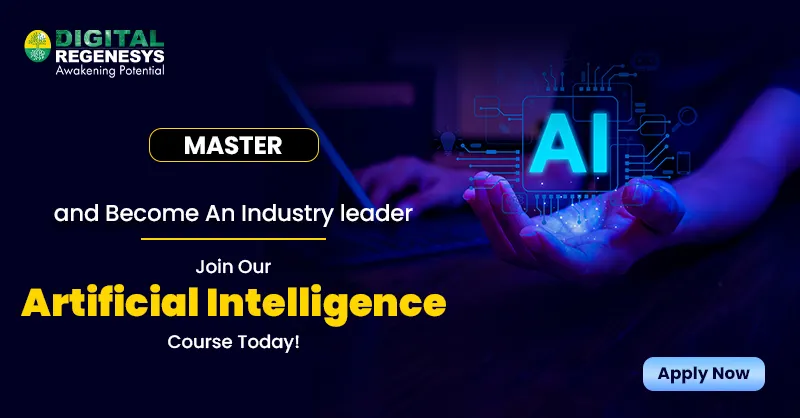
If you want to upskill yourself in AI, you can opt for reputable educational platforms like Digital Regenesys. This online platform offers a Certification Course in Artificial Intelligence that covers all the key concepts. Here’s why you should opt for this course:
- You will gain 47 CPD points through this IITPSA-accredited course.
- You will gain hands-on experience with case studies and AI tools.
- You will learn from industry-expert faculty.
- You will receive a globally recognised certificate after completion.
- It spans only 24 weeks.
Conclusion
AI is already making several parts of our lives easier. Given its evolution and potential, AI can further transform the way we live and work. In the digital era, knowing how to use AI offers several benefits. For instance, it will be easier for you to adopt new technologies and make use of them.
As a beginner, you can opt for Digital Regenesys to upskill in AI.
FAQs
What are the main uses of AI?
The main uses of AI can vary depending on the purpose of its application. However, some of its most common uses are automating recurring tasks and enhancing decision-making.
How can I use AI?
You can use AI in several ways. The most common ones include search engines powered by AI and apps for content and image creation, etc.
How to start with AI for beginners?
As a beginner, you can first develop a learning plan. Then, you can become familiar with the prerequisites, opt for a course on a reputable platform, and start using AI.
Is there a free AI I can use?
Yes, several free AI tools are available for use. These include the free versions of Google Gemini and ChatGPT.
How is AI used in everyday life?
In everyday life, AI has several applications, including customised recommendations in navigation apps and online stores.
Leave a Reply